
A seized brake caliper can prevent a wheel from rotating freely, making the vehicle difficult or unsafe to drive. When this happens, towing may be necessary to move the vehicle without placing additional stress on the brake, tire, wheel, or drivetrain.
For drivers in San Tan, AZ, understanding how a stuck brake caliper affects towing can make it easier to describe the problem and avoid causing further damage before repairs are made.
What Is a Seized Brake Caliper?
A brake caliper is part of a vehicle’s disc braking system. When the driver presses the brake pedal, the caliper pushes the brake pads against the brake rotor to slow or stop the wheel.
Normally, the caliper releases pressure when the brake pedal is released. If the caliper becomes seized, the brake pads may remain pressed against the rotor even when the driver is no longer braking.
This creates constant friction at the affected wheel.
A caliper may seize because of corrosion, damaged slide pins, a sticking piston, worn seals, contaminated brake components, or other mechanical problems. Regardless of the cause, the result can make normal vehicle movement difficult.
What Are the Signs of a Seized Brake Caliper?
A vehicle with a stuck caliper may show several warning signs.
The driver may notice the vehicle pulling strongly to one side, difficulty accelerating, reduced fuel efficiency, or a burning smell coming from one wheel area. The affected wheel may also become unusually hot.
Other signs can include grinding, squealing, or resistance when trying to move the vehicle.
In more severe cases, the wheel may barely rotate or may stop turning altogether.
If a driver notices these symptoms, continuing to drive can increase heat and friction and may damage the rotor, brake pads, wheel bearing, tire, or nearby components.
Can a Vehicle Be Driven With a Seized Brake Caliper?
Driving with a seized brake caliper is generally not recommended.
Even if the vehicle can still move, the affected wheel may be dragging continuously. This can create excessive heat and reduce the vehicle’s ability to handle normally.
The vehicle may also pull to one side during driving or braking, which can make steering more difficult.
A short drive can still create additional wear if the brake remains engaged. If the wheel is severely restricted, forcing the vehicle forward may make the problem worse.
For that reason, towing is often the safer option when a caliper is clearly seized.
How Does a Seized Caliper Change the Towing Process?
A seized caliper matters because the affected wheel may not roll normally.
During towing, operators need to know whether the wheel can rotate freely or whether it is locked. A vehicle that rolls easily can usually be loaded differently from one with a wheel that is dragging or completely immobilized.
If a wheel is locked, pulling the vehicle across the pavement can damage the tire and place additional strain on suspension or steering components.
The towing method should therefore account for the condition of the affected wheel.
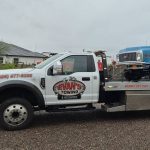
For passenger vehicles, SUVs, and light pickups, a Light Duty Tow Truck may be appropriate depending on the vehicle’s weight, drivetrain, and brake condition.
Does the Vehicle’s Drivetrain Matter?
Yes. Front-wheel drive, rear-wheel drive, all-wheel drive, and four-wheel drive vehicles can require different towing approaches.
The position of the seized wheel matters as well.
For example, a locked front wheel on a front-wheel-drive vehicle may create different loading concerns than a seized rear wheel on a rear-wheel-drive vehicle.
All-wheel-drive vehicles can require additional care because improper towing may place stress on drivetrain components.
This is why a Towing Service should be told both which wheel is affected and what type of vehicle is involved.
Can a Flatbed Be Used With a Seized Brake Caliper?
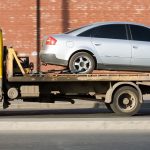
A flatbed may be used in many situations, but a seized wheel can complicate loading.
If the wheel cannot rotate, the vehicle may need additional equipment to move it onto the bed without dragging the tire.
Operators may use wheel dollies or other methods depending on the situation.
The goal is to limit unnecessary movement of the damaged wheel while safely positioning the vehicle for transport.
The exact method depends on vehicle size, road position, wheel condition, and how firmly the brake is stuck.
What Information Should Be Given When Calling for Towing?
Accurate information can help the towing provider prepare for the vehicle.
Drivers should mention that a brake caliper may be seized and identify which wheel appears affected.
They should also provide the vehicle make and model, whether the wheel turns at all, and whether the vehicle can move under its own power.
If there is smoke, a strong burning smell, visible damage, or excessive heat around the wheel, that information should also be shared.
The vehicle’s location is important as well, especially if it is parked on a slope, in traffic, or in a confined area.
What Should a Driver Do While Waiting for a Tow?
Once the vehicle is parked safely, it should remain stationary.
Avoid repeatedly trying to drive forward or backward to free the wheel, since this can increase friction and heat.
Drivers should also avoid touching the affected wheel or brake area because it may be extremely hot.
If the vehicle is stopped near traffic, remain in a safe location away from moving vehicles while waiting for assistance.
When Is Towing the Safer Choice?
Towing is generally the safer option when the wheel will not rotate freely, the vehicle pulls strongly to one side, the brake area is overheating, or continued driving causes unusual resistance or noise.
A seized caliper is more than a minor inconvenience because it directly affects how a wheel moves and how the vehicle handles.
For drivers in San Tan, AZ, arranging Towing rather than continuing to drive can help prevent additional brake, tire, and wheel damage.
If a vehicle develops signs of a seized brake caliper, keep it parked, explain the symptoms clearly when requesting help, and have it transported to a repair facility for inspection before returning it to the road.